Choosing the Right Axe
Choosing the right axe for outdoor and survival use
Choosing the right axe for outdoor and survival use is not about finding the biggest or heaviest tool available. The ideal axe depends on many factors, including the environment, climate, and the specific tasks it will be used for.
Conditions such as humidity, temperature, and terrain influence material choice and maintenance needs, while the purpose of the axe determines its size, weight, and design. An axe meant for chopping firewood, building shelters, or general camp work will have different requirements, and personal factors like strength, experience, and how the tool is carried also play an important role.
There is no universal axe that fits every situation. Understanding your needs and conditions is the first step toward choosing an axe that is safe, practical, and reliable in the outdoors.
Type of axe
The first step in choosing an axe is deciding what type of tool best fits your intended use. Axes come in several forms, and each is designed for a specific balance of power, control, and portability.
Full-sized axes are designed for heavy work such as chopping and splitting large amounts of wood. Their long handles provide strong leverage and powerful strikes, making them effective but heavier and more demanding to use. They are best suited for base camps or situations where weight and size are less of a concern.
Forest axes are a more versatile option for outdoor and survival use. They are shorter and lighter than full-sized axes while still offering enough power for felling small trees, processing firewood, and general camp tasks. This balance makes them a popular choice for extended outdoor use.
Hatchets and hand axes are compact and easy to carry. They excel at light chopping, kindling preparation, and small camp tasks. While they are convenient and lightweight, they lack the reach and power needed for larger wood processing and are better viewed as supplementary tools rather than primary ones.
Choosing the right type of axe depends on how much work you expect to do, how far you need to carry the tool, and whether it will serve as a primary or secondary piece of equipment.
Axe size and handle length
After choosing the type of axe, size and handle length are the next key factors to consider. These elements directly affect power, control, safety, and how tiring the axe is to use over time.
Longer handles provide greater leverage and more powerful swings, which is useful for felling trees and splitting larger pieces of wood. However, long-handled axes are heavier, require more space to use safely, and can be more difficult to carry in the field.
Shorter handles offer better control and precision, making them well suited for camp tasks, kindling preparation, and detailed work. They are easier to pack and maneuver but generate less power, which limits their effectiveness on larger wood.
For most outdoor and survival applications, a medium-length handle offers the best balance. It provides enough power for general wood processing while remaining manageable and comfortable to use. The ideal handle length ultimately depends on the user’s height, strength, and the type of work the axe is expected to perform.

Axe head weight and shape
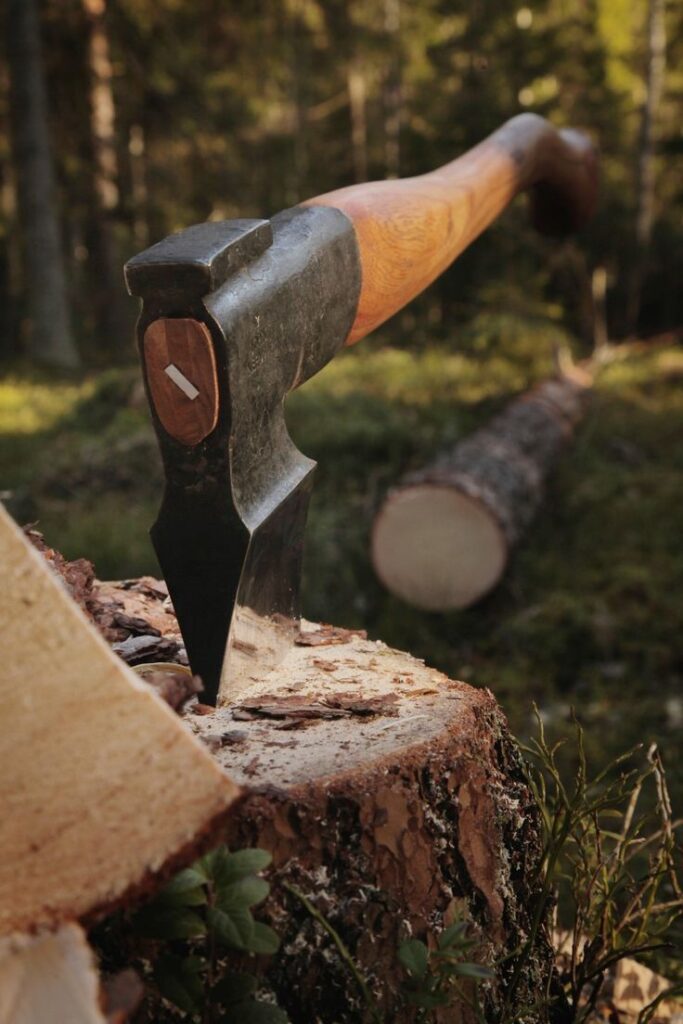
The weight and shape of the axe head play a major role in how efficiently the tool cuts and how comfortable it is to use. A heavier head delivers more force with each strike, while a lighter head offers better control and reduces fatigue during extended use.
Heavier axe heads are well suited for splitting firewood and felling larger trees. The added mass helps the blade drive deeper into the wood, but it also requires more strength and energy from the user. For prolonged use, a head that is too heavy can quickly become exhausting.
Lighter axe heads are easier to control and are better suited for precision tasks such as limbing, shaping wood, and general camp work. They allow for faster swings and improved accuracy but may struggle with large or dense wood.
The shape of the axe head is just as important as its weight. Broad, wedge-shaped heads are designed for splitting, while slimmer profiles with a sharper edge are more effective for chopping and cutting across the grain. A well-balanced head that matches its intended task will be more efficient and safer to use.
Selecting the right head weight and shape depends on the type of work you expect to do and how much effort you are comfortable applying over long periods.
Handle material and ergonomics
The handle is a critical part of an axe, as it affects control, comfort, and safety during use. A well-designed handle allows efficient energy transfer while reducing strain and the risk of injury.
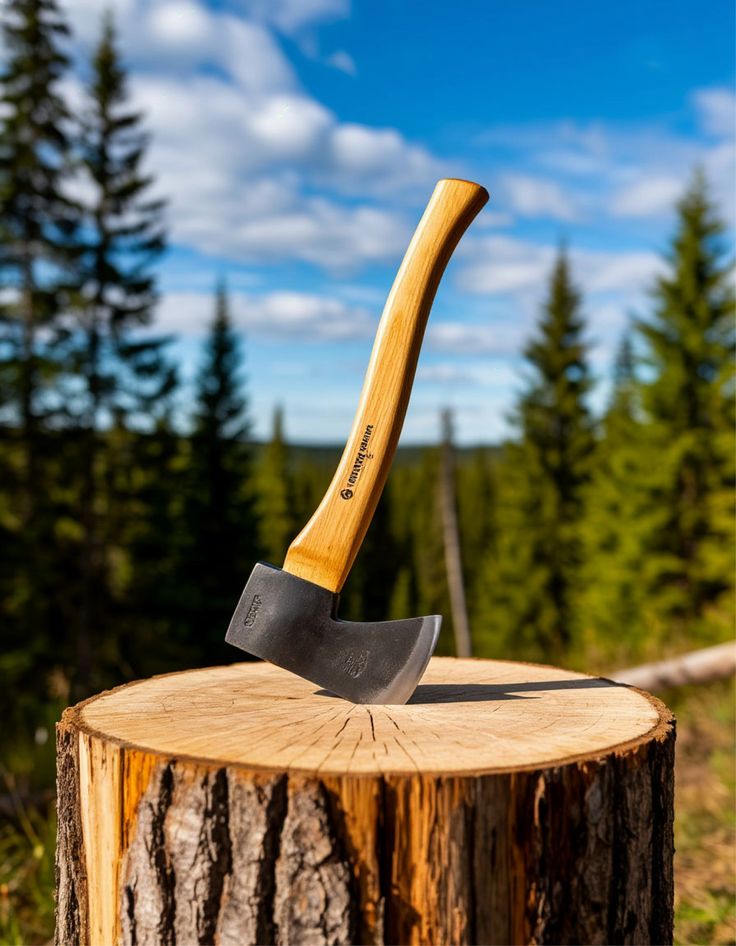
Wooden handles, often made from hickory or ash, are traditional and widely preferred for outdoor use. They absorb shock well, feel natural in the hand, and are easy to replace if damaged. However, they require some maintenance and can be affected by moisture and extreme temperature changes.
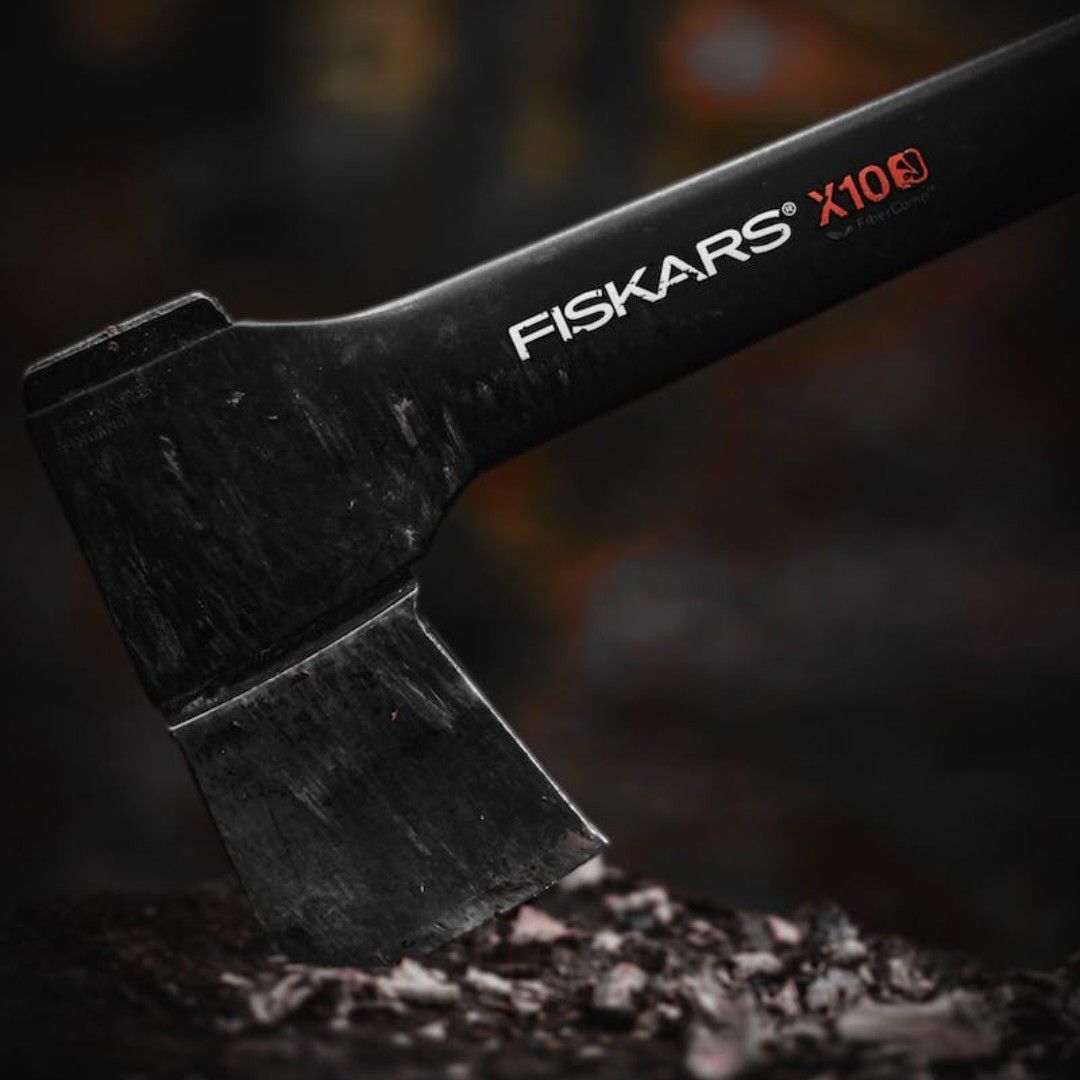
Synthetic handles are durable, weather-resistant, and require little maintenance. They are less affected by humidity and temperature, but they transmit more vibration and are difficult or impossible to replace if they fail.
Ergonomics are just as important as material. The handle should fit the user’s hand comfortably, provide a secure grip in wet or cold conditions, and allow controlled swings. Proper handle shape and length help reduce fatigue and improve accuracy.
Choosing a handle that feels balanced and comfortable will make the axe safer and more effective in real outdoor conditions.

Axe edge geometry and grind
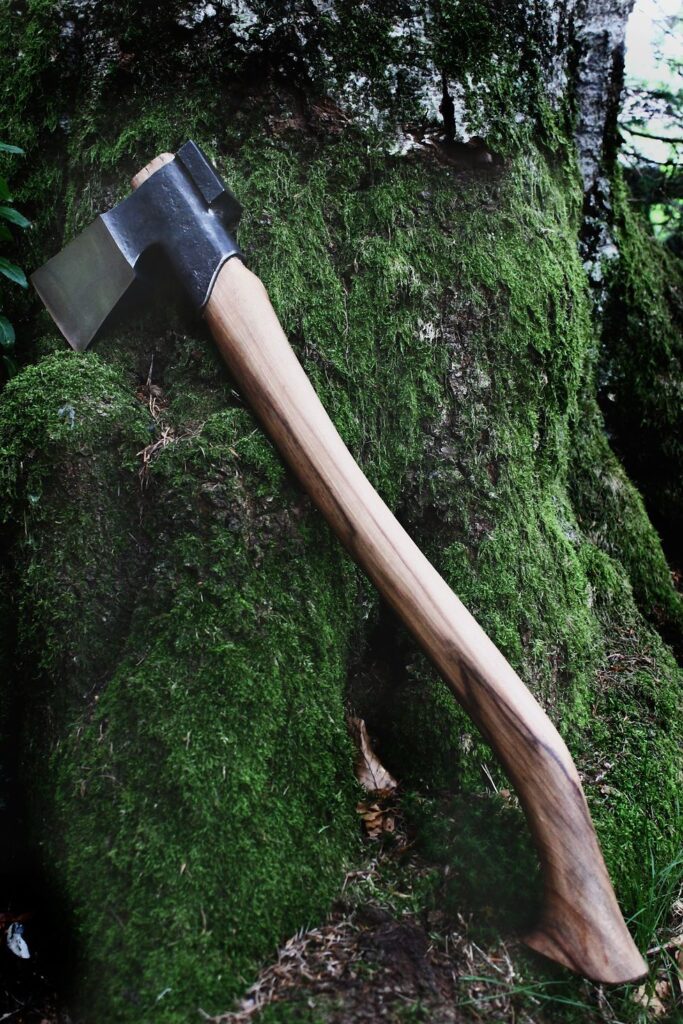
The edge geometry and grind of an axe determine how it interacts with wood and how well it performs specific tasks. Unlike knives, axe edges are designed to withstand repeated high-impact strikes, so durability is more important than razor-sharpness.
Axes intended for chopping and felling typically have thinner edge profiles that cut efficiently across the grain. These edges bite deeply into wood and remove material quickly, but they can be more prone to damage if used improperly or on very hard materials.
Splitting axes use thicker, more wedge-shaped edge geometry. Rather than cutting cleanly, they force the wood apart using mass and shape. This makes them very effective for splitting firewood but less suitable for precise cutting or shaping.
A balanced edge geometry is ideal for general outdoor and survival use. It provides enough sharpness for effective chopping while remaining thick enough to resist chipping and rolling. Such edges are also easier to maintain in the field with basic sharpening tools.
Selecting the appropriate edge geometry and grind ensures the axe performs efficiently, safely, and reliably for its intended purpose.
Carry, safety, and maintenance
Proper carry, safe handling, and regular maintenance are essential for using an axe effectively and preventing accidents. An axe is a powerful tool, and neglecting these aspects can quickly lead to injury or tool failure.
A secure sheath or mask is important for both transport and storage. It protects the edge from damage and reduces the risk of accidental cuts while carrying the axe in a pack or on a belt. When moving with an axe, it should always be secured and never carried loose.
Safe use starts with awareness and control. Adequate spacing, stable footing, and controlled swings are critical. An axe should never be used when fatigued or distracted, as mistakes can have serious consequences.
Regular maintenance keeps the axe reliable and safe. This includes keeping the edge properly sharpened, protecting the head from rust, and checking the handle for cracks or looseness. A well-maintained axe is more efficient, requires less effort to use, and is far safer in outdoor conditions.
Taking the time to care for and handle an axe properly ensures it remains a dependable tool rather than a liability in the field.